Solar Plus Battery Storage for Pacific Islands: Diesel Displacement
Isolated Pacific island grids face high diesel costs and reliability issues. Solar plus battery storage (BESS) displaces diesel by storing excess solar for use during high demand or low generation. Stromfee's BESS solutions for these environments focus on grid stability, safety, and precise energy management. Real-world implementations like Kapolei Energy Storage demonstrate measurable diesel reduction.
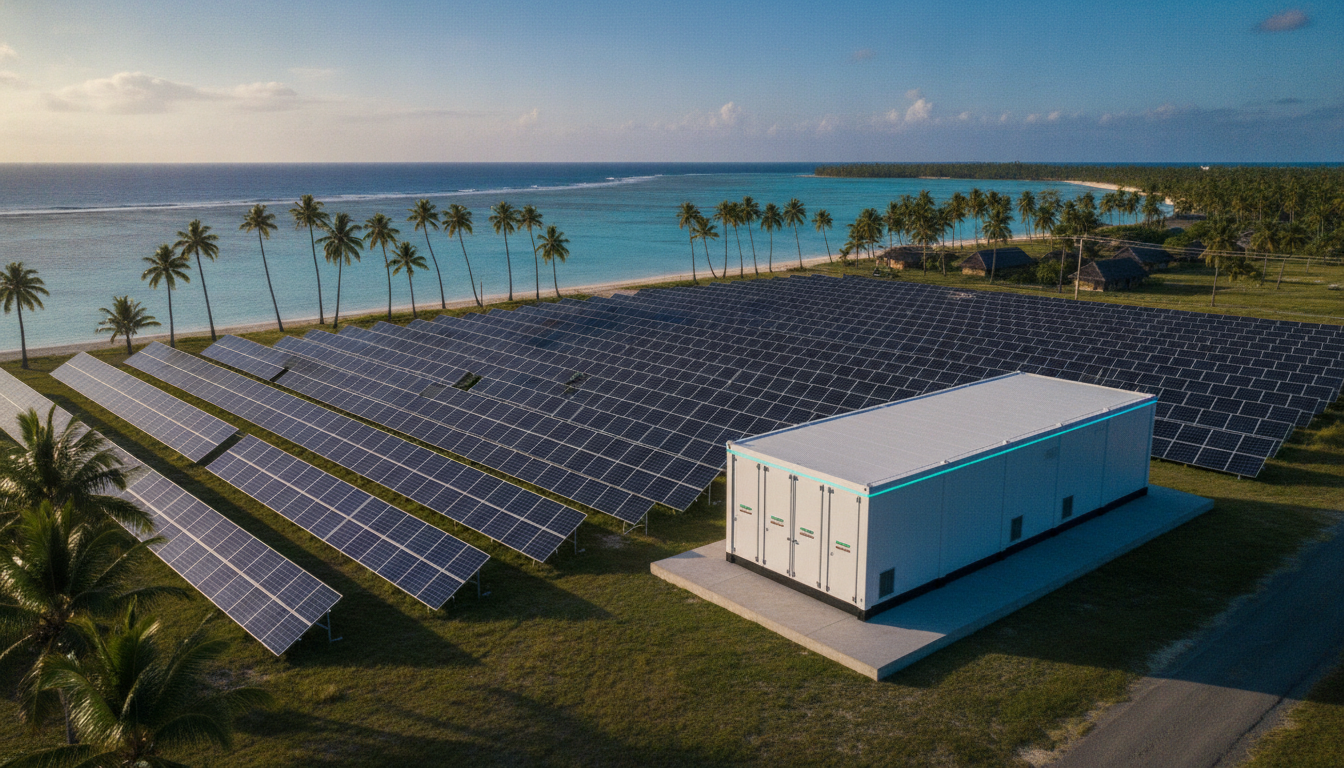
Diesel Dependency Challenges in Pacific Islands
Pacific island grids rely on diesel generators for 90-100% of electricity, with fuel costs 3-5x higher than mainland grids due to transportation logistics and volatile global oil markets. Fuel delivery is vulnerable to weather disruptions, causing frequent outages and price spikes. Emissions from diesel combustion also violate international climate agreements, increasing regulatory pressure.
Island grids lack interconnection to larger systems, making them entirely dependent on local generation. This creates inflexible supply-demand balancing, where diesel units must ramp rapidly for daily load changes, accelerating wear and increasing maintenance costs. The absence of grid inertia further destabilizes frequency during generation or load fluctuations.
BESS Fundamentals for Solar Firming
BESS smooths solar intermittency by storing excess midday generation and discharging during evening peaks or cloud cover. Response times under 20ms enable instant power injection or absorption, eliminating diesel ramping delays. This firming capability ensures continuous supply without frequency deviations, critical for sensitive island loads like hospitals or desalination plants.
Unlike diesel generators, BESS provides zero marginal cost energy during solar surplus periods. The system's bidirectional power flow allows seamless transition between charging (solar) and discharging (load), maintaining voltage stability through reactive power support. This reduces diesel runtime while preserving grid reliability.
Grid Stability Mechanisms Without Inertia
Traditional grids rely on rotating mass from synchronous generators for inertia, which slows frequency changes during imbalances. Pacific island grids with high solar penetration lack this inertia, causing rapid frequency deviations during solar fluctuations or load shifts. BESS emulates inertia through fast frequency response (FFR), injecting or absorbing power within milliseconds to stabilize frequency.
Stromfee's BESS control systems continuously monitor grid frequency and adjust power flow using synthetic inertia algorithms. This replaces diesel units' role in frequency regulation, allowing diesel generators to operate at steady base loads rather than frequent ramping. The result is reduced wear and improved system resilience during sudden events like generator trips.
Sizing BESS for Diesel Displacement
BESS capacity is sized based on daily load profiles and solar generation patterns. Kapolei Energy Storage in Oahu, Hawaii, operates at 185 MW with 0.565 GWh capacity, providing approximately three hours of full-power discharge. This matches evening peak demand when solar generation declines, directly displacing diesel generation during high-cost periods.
Sizing requires detailed analysis of historical load data and solar irradiance. Typically, 2-4 hours of storage covers nighttime peaks and short-term cloud events. Excess capacity beyond this increases capital costs without proportional diesel savings, while undersized systems fail to cover critical demand periods, forcing diesel reliance.
Safety Protocols and Real-World Failures
The 2025 Vistra Moss Landing fire (750 MW BESS) caused $400 million in losses, highlighting critical safety risks. Stromfee implements compartmentalized battery modules with thermal runaway prevention, active cooling systems, and fire suppression protocols compliant with IEC 62619 standards. Each module is isolated to contain failures, preventing cascading incidents.
Remote monitoring via AI-driven Energiemonitoring detects anomalies like temperature spikes or voltage imbalances before failures occur. On-site inspections for corrosion resistance in saltwater environments are mandatory. Safety protocols prioritize passive design features over reactive measures, ensuring operational integrity in isolated island locations.
Integration with Existing Diesel Generators
Hybrid systems combine solar, BESS, and diesel generators in a coordinated dispatch strategy. BESS handles peak shaving and solar firming, while diesel units operate at optimal base loads (60-80% capacity) to minimize fuel consumption and wear. Stromfee's BHKW/CHP integration ensures diesel generators run efficiently during low solar periods, avoiding inefficient part-load operation.
Control systems prioritize solar and BESS for all non-critical loads, only engaging diesel generators during extended low-solar events or grid emergencies. This reduces diesel runtime by 30-50% compared to standalone systems, lowering maintenance costs and extending generator lifespan through consistent load profiles.
Metering and Billing Control
Precise metering tracks real-time energy flows between solar PV, BESS, diesel generators, and loads. Stromfee's control systems optimize dispatch to minimize diesel use by charging BESS during solar surplus and discharging during high-cost diesel operation. This eliminates arbitrage opportunities in spot markets but maximizes savings by avoiding diesel fuel costs directly.
Billing control systems record energy transactions for regulatory compliance and cost allocation. Sub-metering of each component enables granular performance analysis, identifying inefficiencies in solar generation or BESS cycling. This data drives continuous optimization, ensuring maximum diesel displacement without compromising grid stability.
Implementation Steps and Real Projects
Kapolei Energy Storage in Hawaii (185 MW, 0.565 GWh) followed a structured deployment process: grid stability studies, BESS sizing based on local load profiles, drone-inspected PV array assessments, and integration with Hawaiian Electric's infrastructure. Commissioning included rigorous testing of response times, safety protocols, and control system coordination.
Stromfee's implementation for Pacific islands begins with site-specific grid modeling to determine optimal BESS placement and sizing. Drone inspections verify PV array health before BESS commissioning, ensuring maximum solar yield. Ongoing monitoring via AI platforms detects degradation or operational issues, enabling predictive maintenance without on-site visits.
FAQ
How does BESS firm solar in isolated grids without inertia?
BESS provides synthetic inertia through fast frequency response (FFR), reacting within milliseconds to stabilize grid frequency during solar fluctuations or load changes. Unlike diesel generators, which take seconds to ramp, BESS injects or absorbs power instantly, preventing frequency deviations that could cause blackouts in isolated grids.
What BESS capacity is needed to displace diesel in Pacific islands?
Capacity depends on daily load profiles and solar generation. Kapolei Energy Storage in Hawaii uses 0.565 GWh for 185 MW, providing ~3 hours of discharge. Typical sizing is 2-4 hours to cover evening peaks and overnight low solar periods. Oversizing increases costs without proportional savings, while undersizing fails to displace diesel during critical demand.
Can BESS completely replace diesel generators?
No. BESS typically provides short-term storage (2-4 hours), but extended low-solar periods require diesel backup. Systems like Kapolei reduce diesel usage but maintain generators for multi-day cloud events or emergencies. Full replacement would require impractical storage capacity for multi-day outages, making hybrid systems the only viable solution.
How do safety protocols prevent incidents like Moss Landing?
Compartmentalized battery modules, thermal runaway prevention, active cooling, and fire suppression systems isolate failures. Compliance with IEC 62619 standards and remote monitoring via AI-driven Energiemonitoring detect anomalies before failures. Saltwater-resistant materials and regular inspections mitigate corrosion risks in island environments.
What role does metering play in solar+BESS operations?
Precise metering tracks real-time energy flows between solar, BESS, diesel, and loads. This enables dispatch optimization to minimize diesel use by charging during solar surplus and discharging during high-cost periods. Sub-metering identifies inefficiencies, ensuring maximum diesel displacement while maintaining grid stability through data-driven control.
How are BESS systems maintained in remote island environments?
Remote monitoring via Stromfee's AI platform detects degradation or operational issues early. Scheduled drone inspections for PV arrays and on-site maintenance for BESS components address corrosion and wear. Predictive maintenance reduces unplanned downtime, while corrosion-resistant materials ensure longevity in saltwater conditions.
What are the economic benefits of solar+BESS versus diesel-only?
Reduced diesel fuel consumption lowers operational costs by 30-50% for peak shaving. Peak shaving also reduces generator wear and maintenance expenses. Stromfee's control systems maximize savings by charging during solar surplus and discharging during high diesel demand periods, avoiding fuel costs directly without spot market participation.
How does Stromfee handle grid integration for island systems?
Comprehensive grid stability studies determine optimal BESS sizing and placement. Integration includes coordination with existing diesel infrastructure, drone-inspected PV assessments, and control system commissioning. Stromfee's solutions comply with local grid codes, ensuring seamless operation and regulatory adherence without requiring grid upgrades.
Is a battery worth it for you?
Calculate with real prices what a battery storage returns per year.
Calculate storage value →