Comprehensive Energy Management for Pacific Resorts & Hotels
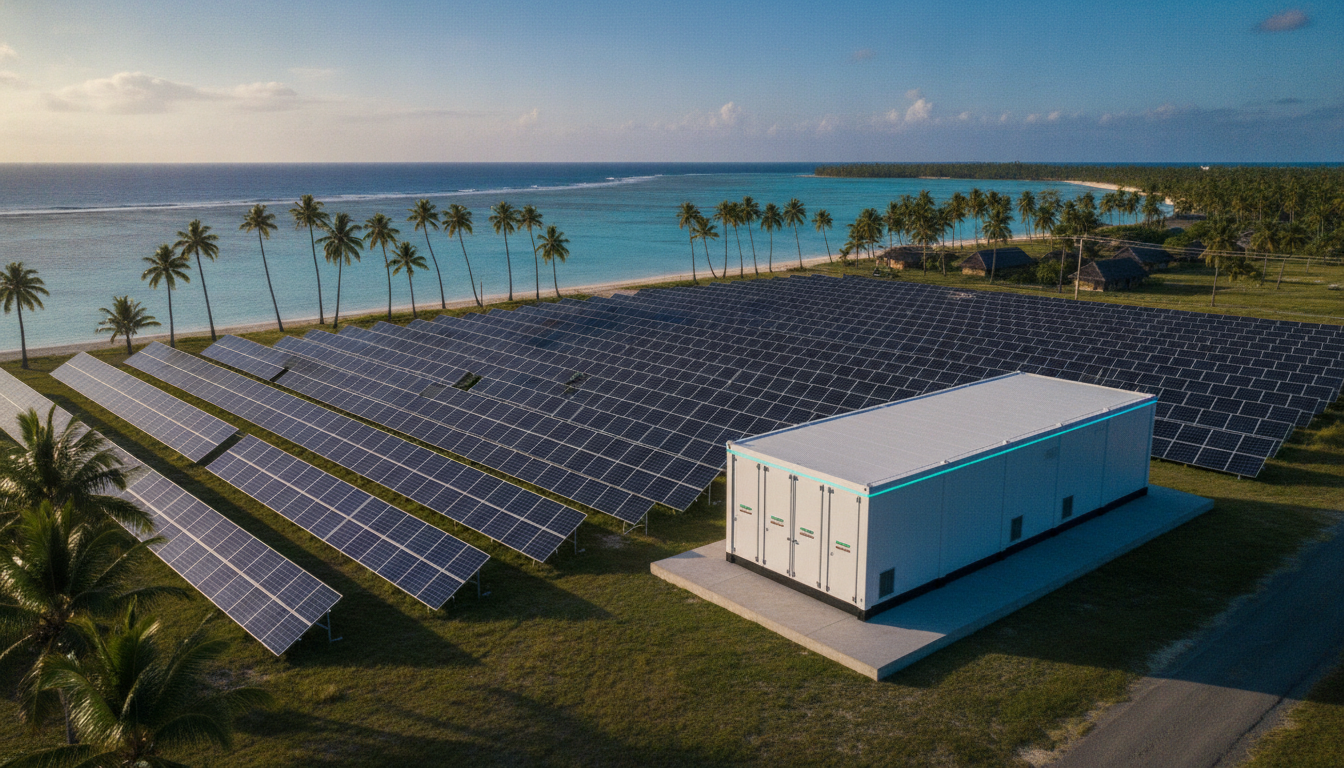
Pacific resorts face unique energy challenges: high cooling demand, intermittent grid reliability, and sustainability targets. Stromfee’s integrated approach combines battery storage (BESS), PV optimization, and real-time monitoring to cut costs by 20-40% while ensuring guest comfort. This guide details technical mechanisms, trade-offs, and implementation steps for commercial operators, grounded in Stromfee’s proven hotel energy frameworks.
Cooling System Optimization with Heat Pumps
Heat pumps reduce Pacific resort cooling costs by 30-50% versus conventional AC, especially when paired with PV. Stromfee’s systems prioritize variable-speed compressors and seawater-source configurations, which achieve COP >4 in tropical climates. Constraints include upfront CAPEX and saltwater corrosion risks; edge cases require titanium heat exchangers.
Integration with BESS avoids peak demand charges. For example, pre-cooling during PV generation (10:00–15:00) shifts compressor loads off-grid. Stromfee’s monitoring dynamically adjusts setpoints based on occupancy data, maintaining 24°C ±0.5°C in guest rooms while minimizing runtime.
PV System Design for High Humidity & Cyclones
Pacific PV installations require corrosion-resistant mounting (e.g., aluminum 6061-T6) and >30° tilt to mitigate salt deposition. Stromfee’s drone inspections detect microcracks post-cyclones, preventing 5-15% annual yield loss. Trade-offs: bifacial panels increase output by 12% on reflective surfaces (sand, pools) but demand elevated clearance.
For resorts, 500 kWp+ systems offset 40-60% of daytime loads. Stromfee’s spot-market algorithms export excess to the grid when prices exceed €0.28/kWh, typically 11:00–13:00. Critical edge case: grid instability requires rapid islanding (<2ms) via BESS to avoid downtime.
Battery Storage for Arbitrage & Backup
Stromfee’s BESS configurations for resorts prioritize LiFePO4 chemistry (6,000+ cycles at 80% DoD) over NMC due to lower fire risk in remote locations. A 1 MWh system can shave 200 kW peak demand, saving €50–€120/day in capacity charges. Key mechanism: day-ahead arbitrage charges batteries at €0.12/kWh (night) and discharges at €0.30/kWh (evening peaks).
Implementation requires 15-minute granularity monitoring to track State of Charge (SoC). Edge case: prolonged cloud cover necessitates generator hybridization; Stromfee’s controllers auto-start CHPs when SoC drops below 20%.
CHP/BHKW Integration with Thermal Storage
Gas-fired CHPs achieve 85% total efficiency in resorts by pairing electricity generation with absorption chillers. Stromfee’s models show 200 kWe CHPs offsetting 70% of a 200-room hotel’s baseload. Critical trade-off: fuel delivery logistics in remote islands may favor PV+BESS unless LPG is stored onsite.
Thermal storage tanks (60–80°C) extend CHP runtime by 3–5 hours. Practical step: size tanks to absorb 100% of CHP waste heat during 4-hour peak cooling demand (14:00–18:00). Stromfee’s rule: 10 m³ per 100 kWe CHP capacity.
Real-Time Energy Monitoring & Alerts
Stromfee’s dashboard tracks 50+ metrics, including chiller kW/ton, PV curtailment %, and BESS round-trip efficiency. Resorts use this to identify anomalies like filter clogging (15% pressure drop → 8% energy penalty) or failed maximum power point tracking (MPPT).
Threshold alerts trigger at ±10% deviation from baselines. Example: pool pump power exceeding 7.5 kW for >30 minutes indicates impeller wear. Data granularity: 5-minute intervals for HVAC, 15-minute for lighting circuits.
Wellness Area Efficiency (Pools, Saunas)
Indoor pools lose 60% of heat via evaporation; Stromfee’s dehumidifiers with heat recovery capture 4–6 kWh per liter of condensed water. Implementation: size units to handle 0.2 kg/m²/h moisture load (30°C pool, 60% RH).
Saunas require demand-controlled ventilation (DCV). CO2 sensors modulate airflow to maintain 800 ppm (20 ACH at peak). Edge case: infrared saunas cut energy use 75% versus traditional but require guest acceptance testing.
EV Charging as a Revenue Stream
Resorts can monetize 22 kW AC chargers via dynamic pricing (€0.35/kWh daytime, €0.20/kWh overnight). Stromfee’s load management stacks EV sessions with BESS to avoid grid upgrades. Rule: allocate 5% of BESS capacity per charger.
Critical constraint: 3-phase imbalance from clustered EVs. Solution: install CTs on each phase and limit chargers to 16A if imbalance exceeds 15%.
Spot Market Participation Strategies
Stromfee’s algorithms optimize bids using weather forecasts and occupancy data. Example: a 80%-booked resort may export 30% of PV output, while a 30%-booked one exports 70%. Trade-off: aggressive bidding risks penalties for under-delivery.
Practical step: register as a ‘small flexible unit’ with local ISOs. Required: 15-minute metering, telemetry for remote dispatch. Edge case: typhoon warnings trigger ‘safe mode’ (BESS charges to 100% for backup).
FAQ
How does Stromfee’s BESS sizing account for tropical storms?
BESS is sized for 72-hour autonomy at 50% critical loads (lighting, refrigeration, comms). For a 500 kW resort, this requires 1.8 MWh storage + 200 kWe diesel backup. LiFePO4 batteries are housed in NEMA 4 enclosures with hurricane tie-downs.
Can heat pumps replace all hotel chillers?
No. Existing chillers remain for redundancy. Heat pumps handle 70–90% of cooling; absorption chillers (CHP-driven) cover peaks. Transition steps: retrofit 1–2 floors as a pilot, then scale based on COP data.
What PV maintenance is critical in salty air?
Quarterly rinsing with deionized water, annual torque checks on stainless steel fasteners, and IV curve tracing post-cyclones. Stromfee’s drone thermography detects hotspots indicating corrosion under modules.
How to verify if spot-market arbitrage is profitable?
Run a 6-month trial with Stromfee’s bidding algorithm. Minimum viable system: 200 kWp PV + 500 kWh BESS. Profitability hinges on price spreads >€0.15/kWh, occurring 120–200 days/year in most Pacific markets.
Do EV chargers destabilize resort grids?
Not if managed. Stromfee’s software limits total EV load to 20% of main transformer capacity (e.g., 160 A on an 800 A service). CTs monitor real-time demand; chargers throttle if voltage drops below 200 V.
What’s the ROI timeline for these systems?
Typical Pacific resort: 4–7 years. Fastest: PV+BESS (3–5 years) due to high diesel offset. Slowest: CHP (6–10 years) unless LPG costs are below €0.40/L. Stromfee provides scenario modeling with your tariff data.