Island Microgrid Design and Control
An island microgrid must hold its own voltage and frequency without leaning on the public grid, so every design choice is really a control choice. This page explains how frequency balance works as a control loop, what protection thresholds keep the island stable and safe, and how generation, storage and load are sized so the island stays reliable when the connection to the outside grid is lost.
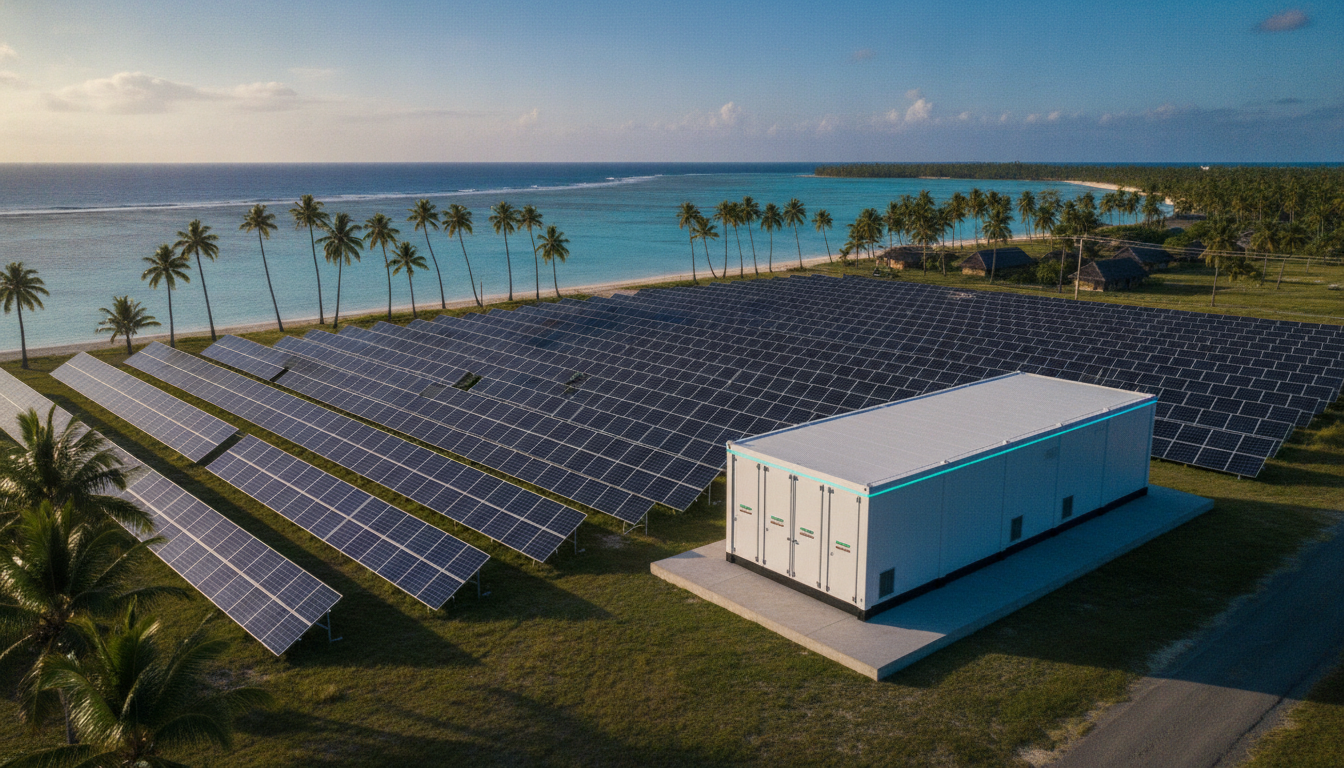
Why islanding changes the whole control problem
In a grid-connected plant the public network fixes voltage and frequency, and any single generator only has to follow. In a CHP context, islanding is defined as the plant continuing to feed a network section after the grid has failed. That state is dangerous because the disconnected line may still be live while maintenance workers assume it is dead — which is why grid protection must detect islanding and disconnect the plant within 200 ms under VDE-AR-N-4105.
A designed island microgrid inverts this: it is intended to run disconnected, so something inside the island must now take over the job the public grid used to do — set the frequency reference, absorb second-by-second imbalances, and keep voltage inside limits. Anti-islanding protection prevents accidental islands; deliberate island operation requires a controllable frequency-forming source and a clean, verified point of separation from the public network.
Frequency as a control loop
The core of island control is the same balance the wider power market runs on: the setpoint is 50.000 Hz (UCTE tolerance ± 0.2 Hz), and the error is the difference between generation and load. When generation exceeds load the frequency rises; when load exceeds generation it falls. In the grid at large the price acts as the slow controller that steers supply and demand back toward 50 Hz.
Inside an island there is no market price acting fast enough, so the physical controller must be a generator or inverter that adjusts its output in real time to hold frequency. Design work therefore starts by identifying which unit is the frequency-forming (grid-forming) source and confirming it has enough fast headroom — up and down — to cover the largest sudden change in load or the loss of the largest running generator without leaving the ± 0.2 Hz band.
Protection thresholds that keep the island safe
The grid protection relay at the handover point monitors both voltage and frequency: it trips on voltage above 110 % (U>>) or below 85 % (U<), and on frequency above 50.2 Hz (f>) or below 49.8 Hz (f<). On a grid failure it disconnects within 200 ms, which both prevents unintended islanding and protects the plant from disturbances coming in from the public network.
For an island microgrid these same thresholds define the operating envelope the internal control must stay inside. The ± 0.2 Hz frequency window and the 85–110 % voltage window are the limits the frequency-forming source and the voltage regulation have to respect. A clear, protected point of separation — the boundary between the microgrid and the public grid — is the single most important piece of hardware, because it decides when the island detaches and when it is allowed to resynchronise.
Sizing generation, storage and load
Reliability in an island comes from matching four things: the peak load, the largest single contingency, the fast reserve available, and the energy stored behind that reserve. A battery energy storage system is the usual fast-reserve element because it can inject or absorb power in milliseconds, covering the gap between a sudden imbalance and slower generators ramping up. Sizing it means separating the power rating (kW, to hold frequency through the worst step change) from the energy rating (kWh, to ride through the longest expected shortfall).
Stromfee's approach to this uses a manufacturer-independent battery-simulation and energy-management platform to model how a given storage size behaves against real load and generation profiles before anything is installed. Because the platform is not tied to one hardware vendor, the same simulation can compare different battery and inverter combinations against the island's contingency case, so the storage is sized to the actual reliability requirement rather than to a supplier's catalogue.
Voltage, transformers and continuous monitoring
Frequency is the island-wide variable, but voltage is local: it sags near heavy loads and rises near generation, and transformer losses eat into the energy budget of a small isolated system where every kilowatt matters. Keeping voltage inside the 85–110 % band therefore depends on where generation and storage sit electrically, and on transformers that are efficient at the load points the island actually runs at.
Sizing is only the start; an island drifts as loads change and equipment ages. Continuous monitoring — of transformer losses, of the frequency and voltage margins, and of how close the system runs to its protection thresholds — is what turns a one-time design into sustained reliability. The same monitoring data feeds back into the energy-management logic, which dispatches storage and generation to keep the island inside its envelope.
A large isolated grid as a reference case
The clearest everyday example of a self-contained island grid is a cruise ship. The Allure of the Seas (Royal Caribbean, in service since 2010) carries an installed electrical capacity of about 96 MW, and it must generate, balance and protect all of that on board with no external connection at sea.
Such a vessel makes the island design problem visible at scale: it needs redundant frequency-forming generation, fast reserve for load steps, and protection that isolates faults without dropping the whole ship. The same principles — hold 50 Hz-class frequency stability, keep voltage in band, size reserve to the worst contingency, and monitor continuously — scale down to a building-, farm- or site-level microgrid.
FAQ
What is islanding, and why is unintended islanding dangerous?
Islanding is when a generating plant keeps supplying a disconnected network section after the public grid has failed. It is dangerous because that section can stay energised while maintenance workers assume the line is dead, so grid protection must detect it and disconnect the plant within 200 ms under VDE-AR-N-4105.
What frequency and voltage limits must an island microgrid hold?
The reference is 50.000 Hz with a UCTE tolerance of ± 0.2 Hz. Protection relays typically trip on frequency above 50.2 Hz or below 49.8 Hz, and on voltage above 110 % or below 85 %, so the internal control must keep the island inside those bands.
What sets frequency inside an island when there is no public grid?
A frequency-forming source — a generator or grid-forming inverter, often backed by battery storage — takes over the job the public grid normally does, adjusting output second by second so that generation minus load stays near zero and frequency stays at 50 Hz.
How do you size storage for island reliability?
Separate the power rating (kW), sized to hold frequency through the largest sudden load step or generator loss, from the energy rating (kWh), sized to ride through the longest expected shortfall. Stromfee models this with a manufacturer-independent battery-simulation and energy-management platform against real load profiles before installation.