Energy Monitoring for Island Network Operators
Island utilities run largely self-contained grids where every generation and consumption point matters. Continuous energy monitoring gives operators transparency over consumption and production, helps detect anomalies, and supports cost reduction by exposing inefficient devices and processes. This page explains how the Stromfee-Tagebuch approach — granular metering, grid analysis and real-time analytics — applies to island network operation.
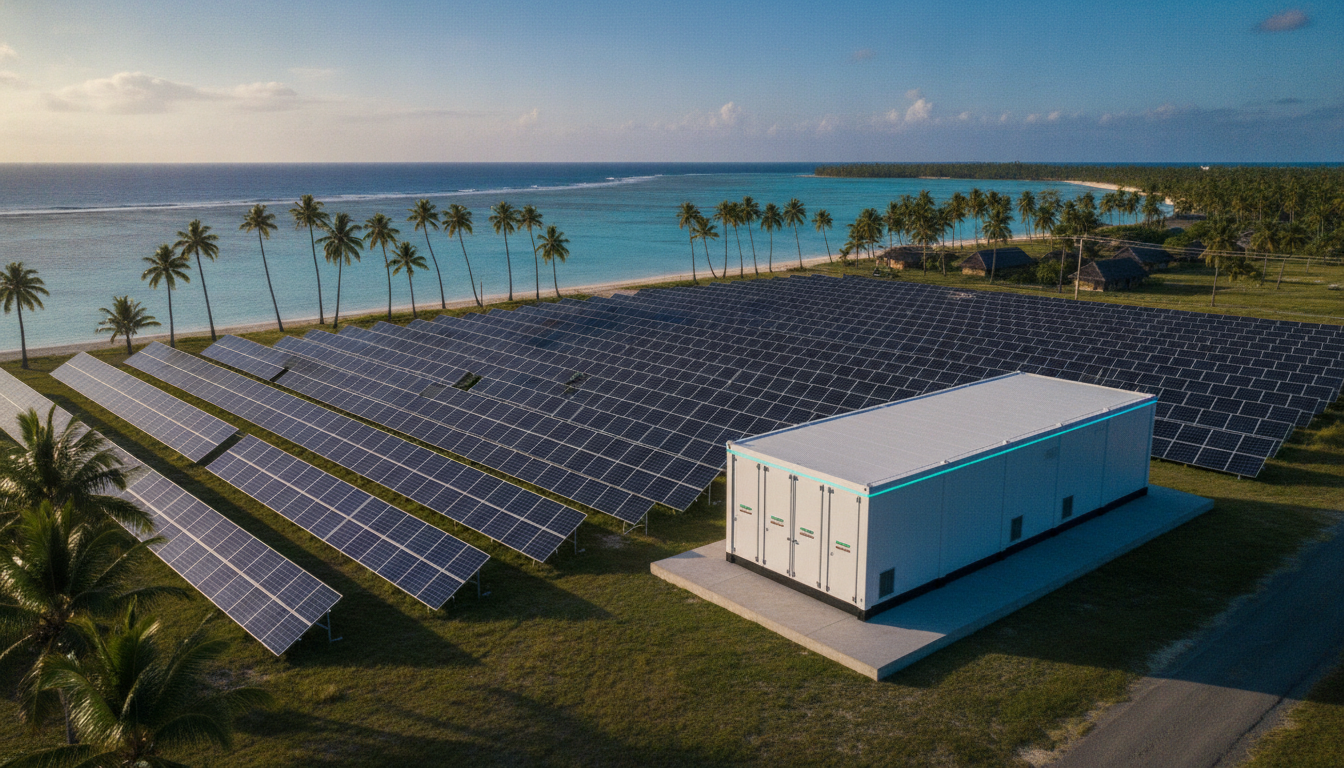
Why continuous monitoring matters for an island grid
Monitoring energy consumption lets operators see exactly how much energy is used and what it costs, which makes it possible to identify inefficient devices or processes and act on them to reduce costs. On an island grid, where supply is constrained and every asset counts, this transparency is the basis for operational decisions rather than an afterthought.
A more conscious approach to energy also lowers overall consumption, which supports environmental goals alongside cost control. The same logic that helps a hotel or business cut its energy use applies to a network operator responsible for a defined set of feed-in and consumption points.
Grid analysis of feed-in and supplier installations
Stromfee offers permanent grid analysis (Netzanalyse) of feed-in and supplier installations. For an island operator, this means the equipment that injects power into the grid and the installations that draw from it can be observed continuously rather than checked periodically.
Ongoing analysis keeps the operator transparent about what is happening on the network, helps surface anomalies early, and provides the measured basis needed to improve energy efficiency and keep costs down.
Real-time data over an MQTT architecture
The Stromfee-Tagebuch is an AI-supported energy monitoring system built to observe and analyse both energy consumption and production. It consists of hardware components that communicate using the MQTT protocol, a common method in automation technology valued for its reliability.
MQTT is used as a broker for moving IoT data, and that data can be persisted for analysis in a time-series store such as InfluxDB. This messaging-based design suits the many distributed metering points a granular island monitoring setup requires.
Generation and PV monitoring with market transparency
Alongside consumption, the system monitors generation. PV monitoring in the Stromfee-Tagebuch delivers real-time data and market transparency, so operators can follow production against conditions as they change.
For island grids that combine solar with other supply, per-installation generation data helps balance the network and confirm that assets perform as expected instead of relying on estimates.
Audit versus continuous monitoring
An energy audit and energy monitoring are different tools. An audit is a point-in-time assessment, while monitoring is continuous and works with real-time data to understand, optimise and support sustainable operating practices.
For an island utility, continuous monitoring complements any audit: it keeps the picture current between assessments and turns one-off findings into ongoing operational transparency and efficiency gains.
AI support for staying current
The system uses artificial intelligence so that operators stay up to date on the state of their network, including detecting anomalies and identifying efficiency improvements. Stromfee also provides an AI spot-price management capability for monitoring and control tied to electricity prices.
Combined, transparency, anomaly detection and AI-assisted price awareness give island operators a consistent basis for reducing costs and improving efficiency across their generation and supply installations.
FAQ
What is the difference between an energy audit and energy monitoring?
An energy audit is a point-in-time assessment of energy use, while energy monitoring is continuous and works with real-time data to understand, optimise and support sustainable operation. Monitoring keeps the picture current between audits.
Why does an island utility benefit from granular metering?
Granular metering exposes exactly where energy is consumed and produced, letting operators identify inefficient devices or processes, detect anomalies, and reduce costs — which matters more on a constrained, self-contained island grid.
What technology does the Stromfee-Tagebuch use to collect data?
It is an AI-supported monitoring system with hardware components that communicate via the MQTT protocol, a reliable method common in automation. MQTT moves the IoT data, which can be stored in a time-series database such as InfluxDB for analysis.
Can Stromfee monitor both feed-in and supply installations?
Yes. Stromfee offers permanent grid analysis (Netzanalyse) of feed-in and supplier installations, giving continuous transparency over both generation injected into the grid and the installations drawing from it.