Diesel to Solar Transition for Island Grids
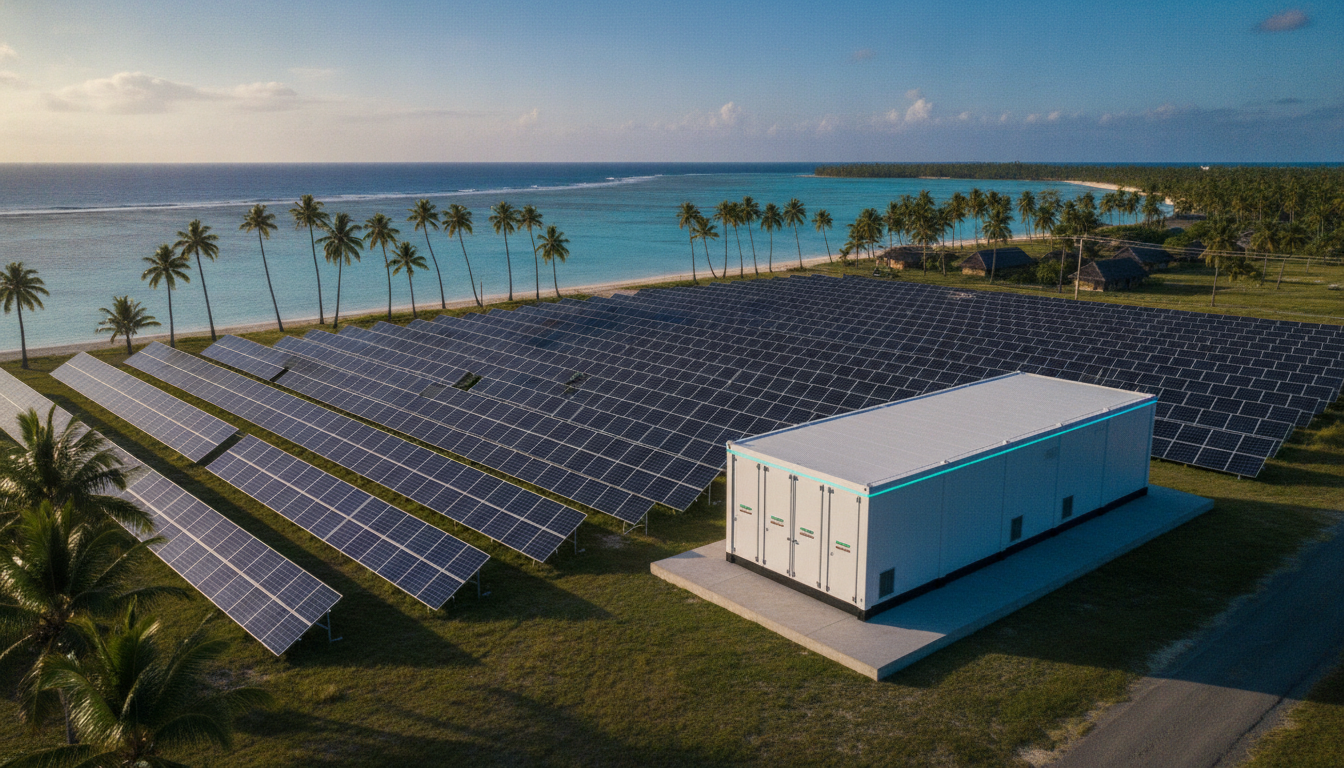
Island and isolated grids often run on diesel generators because they cannot import power and have no margin for outages. Solar PV paired with battery storage can displace a large share of that diesel fuel, but on a small grid with no external backup the change has to be staged. This page covers how the transition is being done on real island systems and how to size it before spending capital.
Why island grids depend on diesel in the first place
Isolated grids carry no reserve from a neighbouring network, so every megawatt has to be generated locally. In Nigeria's five largest cities – Lagos, Kano, Ibadan, Abuja and Port Harcourt – chronic grid outages have driven intensive, everyday use of diesel generators as the de-facto power supply between 2023 and 2025. The same logic applies to physical islands: on Oahu, Hawaii, the local grid is described as an island system with zero fault tolerance, because there is nowhere to draw backup power from.
Diesel keeps the lights on but ties the operator to fuel price and delivery logistics. That is exactly the cost that a solar-plus-storage build is meant to remove, which is why the same Nigerian cities have seen growing adoption of solar PV and battery storage in parallel with their diesel fleets rather than as a sudden switch.
What a staged transition looks like on real island systems
The transition is already visible at utility scale. The Kapolei Energy Storage project on Oahu provides 185 MW and 565 MWh of battery capacity and is tied to retiring the last coal power plant in Hawaii – storage taking over the firm-capacity role that a fossil plant used to hold on an island grid.
In the Atacama Desert in Chile, the Grenergy Gabriela project pairs solar with 1.1 GWh of storage as part of the first 24/7 solar-plus-storage system in Latin America. The pattern in both cases is the same: PV supplies energy while the battery supplies the around-the-clock firmness that diesel or coal used to provide, so generation can be replaced in stages rather than all at once.
Storage is what keeps the grid stable as diesel comes off
On a large interconnected market, storage smooths variability; on a small island grid it is a stability requirement, not an add-on. Because an island network has no external backup, the battery has to cover the seconds-to-hours gap when a cloud passes or evening load rises, otherwise removing a diesel set would reduce reliability.
This is why the megawatt-hours matter as much as the megawatts – Kapolei's 565 MWh on Oahu and Gabriela's 1.1 GWh in the Atacama exist to hold output through the hours when PV is low. Staging the diesel-to-solar shift means adding PV and storage in blocks, verifying that each block covers its share of firm demand before the next diesel unit is switched off.
Size the PV and battery before you commit capital
The economic risk on an island project is building the wrong ratio of PV to storage – too little battery and diesel stays in the loop, too much and capital sits idle. Stromfee.AI runs a manufacturer-independent battery simulation and energy-management platform, including a PV-plus-BESS simulator, so the PV array and battery can be dimensioned against real load and generation profiles before hardware is ordered.
Keeping the tool manufacturer-independent matters for island operators, who typically integrate whatever generators, inverters and batteries are available locally rather than a single vendor's stack. Simulating the combined PV, storage and residual-diesel system first is how the staged plan gets tied to numbers instead of assumptions.
Portable and backup power for smaller island loads
Not every island load is a utility-scale build. For remote sites, workshops and homes that today lean on a small diesel or petrol generator, portable power stations cover the same backup role without fuel. EcoFlow's DELTA series is one example, with the DELTA Max offering up to 2 kWh of capacity and fast recharging, usable as an emergency power source.
At this scale the transition is incremental: a portable station charged from a modest PV panel can carry lighting, communications and small appliances, letting a household or site cut generator run-hours first and scale up to fixed PV-plus-storage later.
The economic case for coming off diesel
The driver behind the switch is the same one that motivates farms and other independent operators: becoming less dependent on external supply, cutting running costs, and in some cases earning revenue from the energy assets rather than only paying for fuel. On an island grid, every litre of diesel displaced by PV is a direct, recurring saving that does not depend on a fuel delivery arriving.
Because the change is staged, the savings start early – the first PV-and-storage block already reduces fuel burn – while the harder, high-availability hours are handled by later blocks once the storage is proven. That sequencing is what makes the diesel-to-solar transition bankable on grids that cannot afford a single hour of instability.
FAQ
Can solar and batteries fully replace diesel on an island grid?
They can displace a large share of it, and projects like Kapolei Energy Storage on Oahu (185 MW / 565 MWh) show storage taking over the firm-capacity role once held by a fossil plant. On a grid with zero fault tolerance the practical route is staged replacement, adding PV and storage in blocks and only retiring diesel units as each block proves it covers firm demand.
Why does an island grid need so much battery storage?
Because it has no neighbouring network to borrow from, the battery must cover the gap when PV output drops – from passing clouds to the evening peak. That is why island projects are sized in gigawatt-hours of energy, such as 565 MWh on Oahu or 1.1 GWh at Gabriela in the Atacama, not just in megawatts of power.
How do you decide how much PV and battery to install?
By simulating the combined PV, storage and residual-diesel system against real load and generation profiles before ordering hardware. Stromfee.AI provides a manufacturer-independent battery-simulation and energy-management platform with a PV-plus-BESS simulator for exactly this dimensioning step.
What about small remote sites, not full grids?
For homes, workshops and remote loads currently on a small generator, portable power stations such as EcoFlow's DELTA Max (up to 2 kWh, fast recharge) can serve as a fuel-free backup source, letting the site cut generator run-hours first and move to fixed PV-plus-storage later.