Commercial Cooling Energy Management in the Tropics
In hot climates, cooling is often the single largest electricity consumer in a commercial building, and unlike temperate sites it runs hard all year. This page explains why cooling dominates tropical energy bills, why free cooling is not an option, and how monitoring and load optimization help operators bring HVAC and refrigeration costs under control.
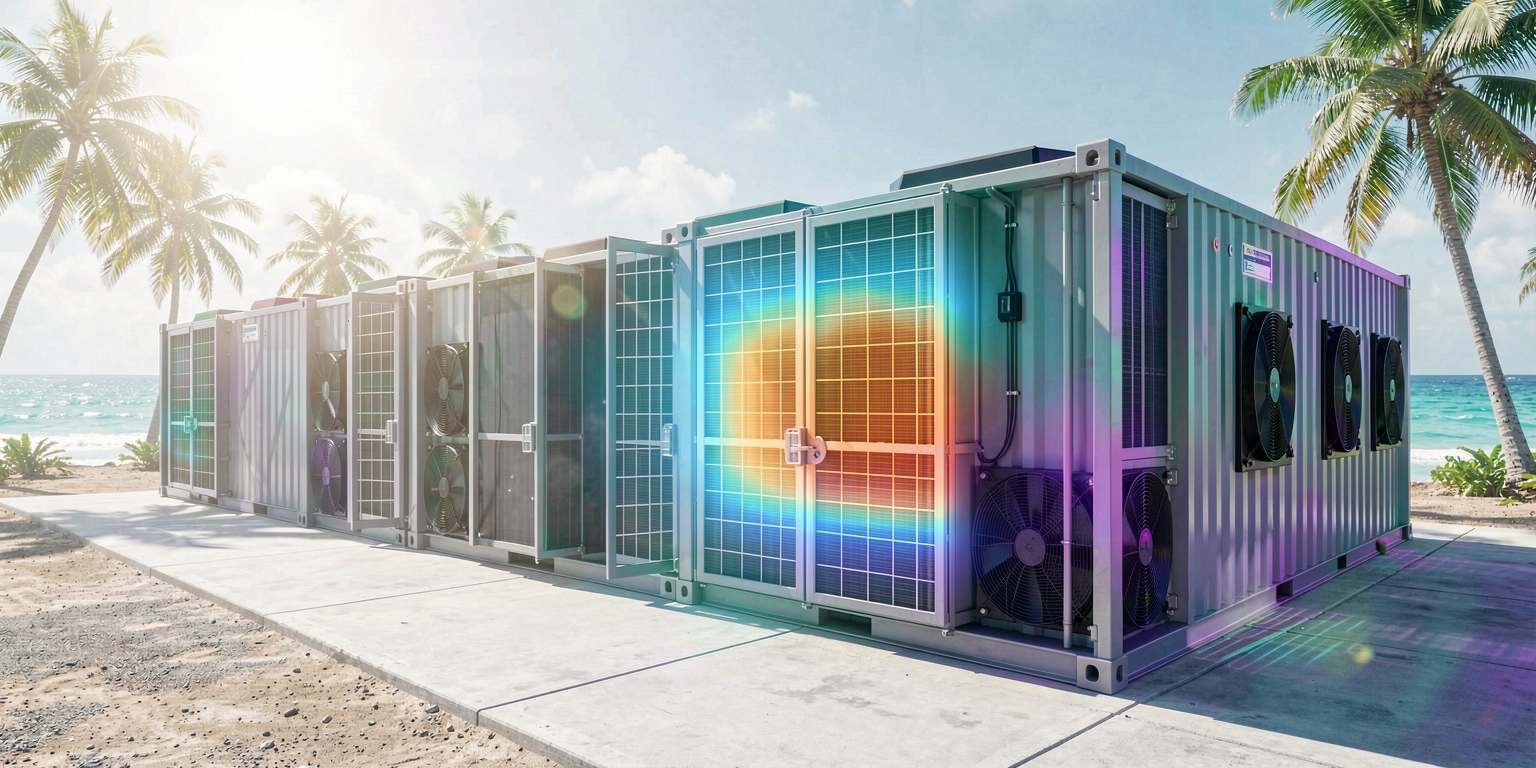
Why cooling dominates the electricity bill in hot climates
In many commercial operations, air-conditioning and refrigeration systems consume more electricity than all other loads combined. In hot climates such as Dubai, efficient cooling for buildings and data centers is business-critical rather than optional, because the systems run at high load for most of the year.
The scale shows up even in large infrastructure. Energy is among the biggest operating costs of airports, accounting for roughly 10–15% of the total budget, with electricity for lighting, air-conditioning and other systems making up a substantial part. For any operator in a warm region, cooling is therefore one of the first places to look when trying to reduce electricity spend and peak demand.
Free cooling is not available in the tropics
Cold-climate sites can lean on the outside air. Brookfield's planned AI data center in Stockholm sits in a location with an annual mean temperature of about 8 °C, which is described as ideal for free cooling, and the nordic climate is expected to save energy compared with southern Europe.
Tropical operators do not have that advantage. With ambient temperatures high year-round, mechanical cooling must do the work that outside air does elsewhere. That removes the cheapest lever available in Stockholm and puts the emphasis on running the cooling plant that you do have as efficiently as possible.
Energy monitoring is the foundation
Systematic energy monitoring makes consumption visible, uncovers faults in how the plant is being operated, and creates the data basis for targeted optimization. Without it, oversized set points, simultaneous heating and cooling, or equipment left running are invisible and simply show up as a higher bill.
The results depend on doing it properly: the measurement points have to be chosen correctly and the data has to be evaluated consistently. Metering only the main incomer tells you little about which chiller, pump or air-handling unit is driving cost. The value comes from resolving cooling loads at the level where decisions can actually be made.
AI-supported monitoring for large cooling plant
Once the measurement basis is in place, AI-supported monitoring can be applied to large chillers in data centers and buildings, as in the Dubai case, to detect drift and inefficiency that manual inspection misses. Analyses of data center load profiles worldwide show the value of working with live data rather than periodic snapshots, so that cooling behavior can be tracked as it happens.
This matters in the tropics because cooling load tracks the weather closely and changes through the day. Continuous, data-driven oversight of the cooling profile is what makes it possible to distinguish a genuine load increase from a developing fault, and to act before efficiency slips.
Load optimization to manage peak demand
Electricity markets are changing. Rising shares of renewable energy and revised market rules lead to large fluctuations in electricity prices, which makes intelligent load management increasingly important for operators of refrigeration plant that want to keep their electricity costs competitive.
Cooling and refrigeration are among the better loads to shift, because thermal mass and stored cold give some flexibility in when the compressors run. Stromfee's AI load optimization for refrigeration systems is aimed at exactly this: using that flexibility to move consumption in response to prices and load, rather than running cooling at full cost through every peak.
FAQ
Why is cooling such a large share of commercial electricity use in the tropics?
Because ambient temperatures are high all year, mechanical cooling runs at high load almost continuously. In many commercial operations, air-conditioning and refrigeration already consume more electricity than all other loads combined, and in hot climates that share is even harder to avoid.
Can tropical sites use free cooling like northern data centers?
No. Free cooling depends on cool outside air — the Stockholm data center site benefits from an annual mean temperature of about 8 °C. Tropical operators have no such ambient reserve, so the focus shifts to running mechanical cooling efficiently and shifting load in time.
What has to be in place before optimization delivers results?
A sound monitoring basis. Energy monitoring only pays off when the measurement points are chosen correctly and the data is evaluated consistently. Good metering makes consumption visible and uncovers operating faults, which is the prerequisite for any targeted optimization.
How does load management help with cooling costs when prices fluctuate?
Rising renewable shares and changed market rules cause large swings in electricity prices. Because cooling and refrigeration have thermal inertia, their consumption can be shifted in time. AI-based load optimization uses that flexibility to reduce cost during peak-price periods rather than running cooling at full cost throughout.